


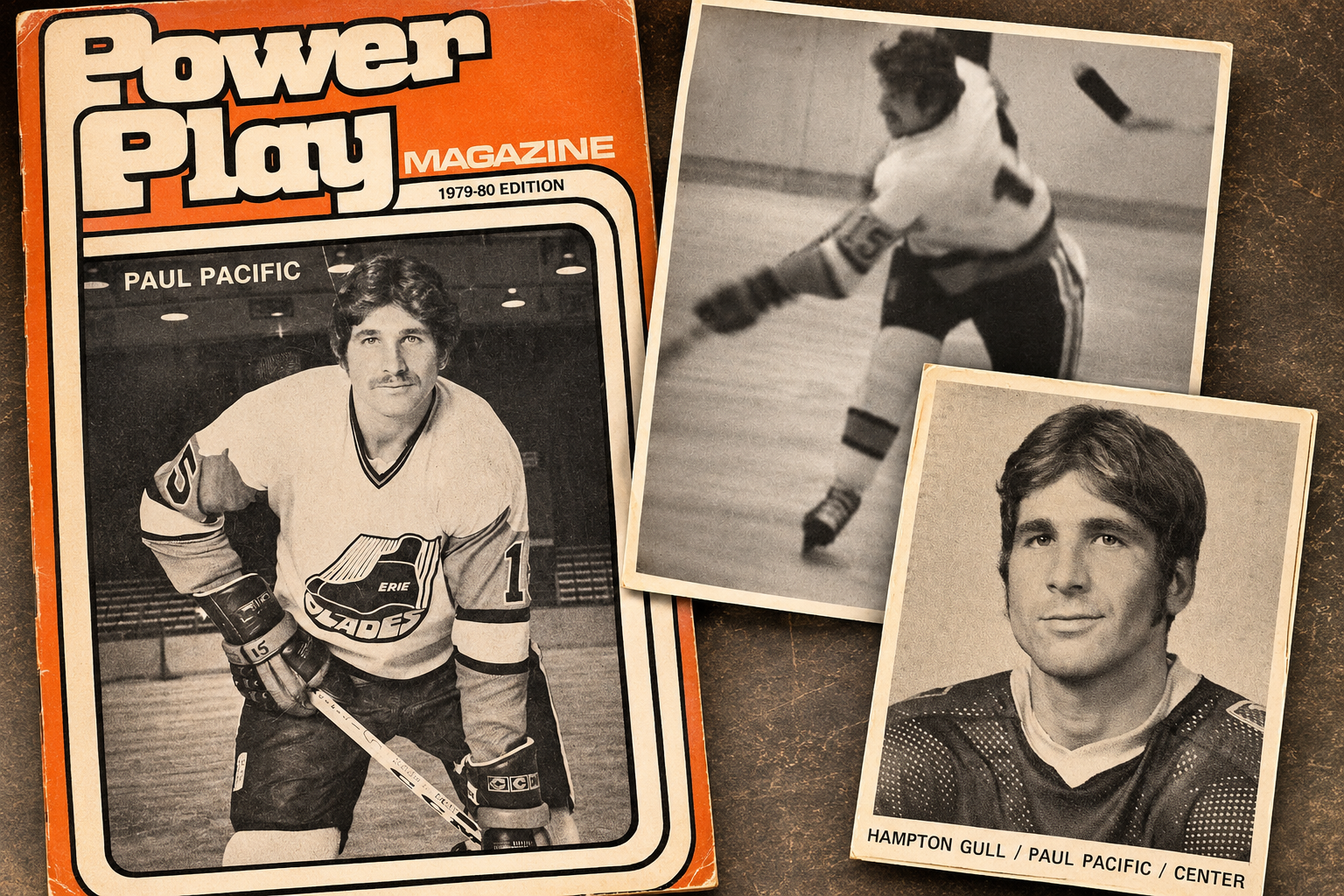
There was a time when the chatter about top hockey players in Marlboro would inevitably include the last name Pacific.
Decades later, the name still carries weight around area rinks.
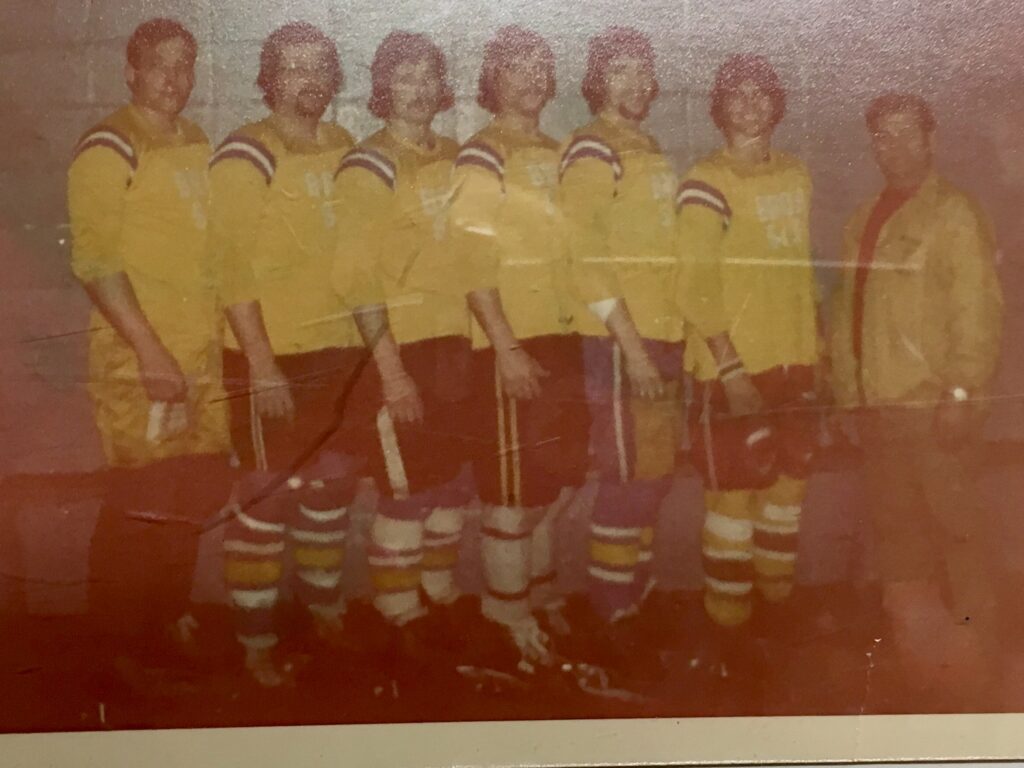
Six of the Pacific boys, playing under the fitting name “The Brothers Six,” barnstormed to tournaments and competed in Pro-Am leagues throughout the 1970s and ’80s.
Everywhere they went, a ‘W’ was highly likely.
“Of all the tournaments we played in, we won all but a handful,” said Paul Pacific in a phone interview last week. “We went to play in a Maynard league and were picked to finish last. After going 24-0-1, they decided they didn’t want us in the playoffs and put the second- and third-place teams in instead.”
Wearing canary yellow uniforms bought by their dad, George, who formed the team, they added other strong players from elsewhere and from the Marlboro-Hudson area to fill the roster through the years.
Lining ’em up from oldest to youngest: Harry, George, Paul, Joe, David, and Donald. Kind of like the Beatles from the Borough, no?
“We were extremely successful,” Paul said. “Sometimes teams would come in on a bus with nothing but D-I (college) players. Not only did we win, but we gave them a spanking a couple of times.”
Of the six brothers, Paul went the furthest in hockey. After his days skating for Marlboro High and American International College, he went on to play pro hockey from 1976 to ’82.
True to form, it makes sense that Paul picked a moment that included a family member when asked for his most memorable time as a pro.
“My brother George drove down when I was playing for the Hampton (Virginia) Gulls (minor league affiliate of the Cincinnati Stingers of the World Hockey Association) to see us in the final game,” Paul said. “He was the first in the family to see me play as a pro. It was in front of a big crowd and I was given the most popular player award for the season afterward. That’s the first thing that stands out in my head.”
That memorable moment came during the 1976-77 season, when the Gulls finished 32-16-2 and were declared Southern Hockey League champions after the league unexpectedly folded.
Another highlight he cherishes is his induction into the Marlboro High Athletic Hall of Fame in 2000. Making the playoffs in all but the last of his five pro seasons also ranks among his proudest accomplishments.
Pacific endured numerous hockey injuries, but one in particular had more impact than others.
After graduating from MHS in 1969, the high-scoring Panthers line of Pacific at center and Bobby Gorman and Jimmy Gordon at the wings went together to AIC.
“We were allowed to practice with the varsity,” Paul said. “We kicked the crap out of their third line and outplayed their second line. The coach wanted us to do 1-on-2s against their top defensive. I blew by them. That didn’t set well with the coach, so he said, ‘Next time, hit him.’ So then I used area pass off the boards to get around them.” After success on the third try, Pacific later heard them talking in the locker room: ‘We gotta watch this guy. He has no fear.’ “
Not long after that, one of the players butt-ended Pacific in the eye.
“Five guys came out to help,” Paul continued. “I almost lost my eye. I can’t tell you how much that changed my life. It took me a couple of years to get back in shape.”
That story, according to Paul, is in his 2012 book “The Spirit Within: How We Are Connected To God, Each Other, And All Things.”
That spiritual work, which won first place in the Great Southeast Book Festival, also includes Pacific’s and others’ out-of-body experiences.
In essence, he believes — as surely as the sun rises and sets — that life continues beyond physical death.
Aside from being an author, Pacific has an extensive background as a motivational speaker with Students Against Drunk Driving (now Students Against Destructive Decisions) and has addressed schools in 35 states and groups as large as 4,000.
In the pros, aside from Hampton, he played for the Mohawk Valley Comets (North American Hockey League), Utica Mohawks (Northeast Hockey League), Erie Blades (NEHL and Eastern Hockey League), Baltimore Clippers (EHL), Richmond Rifles (EHL), and Baltimore Skipjacks (Atlantic Coast Hockey League).
In 1978-79, Pacific’s Erie team captured the NEHL title, and while playing three seasons in Baltimore, he was a fan favorite, making many TV and radio appearances.
At the end of Erie’s championship season, Pacific said he came tantalizingly close to earning a $10,000 performance bonus, only to lose out under circumstances he still questions.
“I went into the last game with 58 points (needing 60 for the bonus),” he said. “I go out and score the first goal, but (right after that) I was thrown out of the game. Somehow my name didn’t get on the official roster (and the goal didn’t count).”
Rewards came in a different form, however.
“We were the talk of the town and couldn’t go anywhere without people buying you a drink,” he said.
In Pacific’s last pro season, he was the captain and assistant coach of the Skipjacks.
Another story from the minors involves one of the Hanson brothers from the movie “Slap Shot.”
“Those guys are actually the Carlson brothers, Jeff, Jack and Steve, and I was roommates with Jeff,” Paul said. “Jack got called up (to play for Edmonton in the WHA), so they got Dave Hanson to play the third brother. I drove Jeff to the airport when he was going to Hollywood for the premiere. He told me they had to be in their equipment all day with little to do in order to be ready for when they did the filming. They decided to take some time off, so they were fired by the director. Then, Paul Newman walked in, saying, ‘You’re not firing them. These are my boys.’ “
Looking back on his hockey beginnings, Pacific remembers makeshift youth hockey rinks at Lake Williams, Maple Street and what eventually became the ninth hole at Marlboro Country Club.
Compared to today’s world, that’s roughing it.
In high school, practices and games at the cold barn known as Webster Square Arena in Worcester weren’t exactly ideal, either.
When the state built Navin Rink in 1973, Pacific saw how fortunate the next generation of Marlboro youth hockey players was.
Recalling the Panthers’ high school teams he played for (one JV and three varsity seasons), Pacific rattled off just some of the names aside from Gorman and Gordon: coaches Ted Rolfe, Bob Anastas, and Leo Agnew, assistant coach Ed Clancy, and players Wally and Richie Brennan, Norman Bouthilette, Jimmy Risotti, Chuck Colacchio, and Ralph Evangelous. He also mentioned two Marlboro guys, Mike and John O’Malley, who suited up for the Brothers Six.
“Bobby Gorman and I have been friends forever,” Pacific said. “He’s the seventh brother (and was a longtime member of the Brothers Six). One time, Bobby broke his stick and wasn’t going to show up at a summer league game because of it. My father said, ‘I don’t give a shit. Get in the car and get to the rink.’ He bought him a stick and said, ‘Don’t ever do that again.’ “
Under Anastas as head coach, the Panthers were strong in Pacific’s junior year.
“We came together as a team,” Paul said. “Marlboro was noted for fighting and being an easy win, but we were beating teams that we weren’t supposed to and elevated the status of MHS hockey.”
Interestingly, that year (1967-68), coach Dick Longueil led Auburn to the state high school championship, a rarity for a Central Mass. team. Hudson accomplished the same feat exactly 10 years later. Longueil, meanwhile, came over to coach the Panthers in the mid-1970s.
During his time with the Brothers Six, Pacific and some teammates competed in a talent show, a promotion for Budweiser.
“We brought down the house,” he said. “Our line was, ‘We’re the No. 1 amateur hockey team and we drink only the No. 1 beer.’ Then we all (pretend to) open beers with our teeth and, when we smile, everybody sees that our front teeth are blacked out.”
Pacific also used that gimmick in a Baltimore-area TV commercial. It was a promotion for WJZ Ch. 13, an ABC affiliate where Oprah Winfrey was a newscaster at the time.
In the ad, Pacific is on ice practicing with a youth hockey player, and at the end, they both fall and smile, showing blacked-out teeth on the two of them.
“When I was out lecturing at high schools in that area, the kids recognized me from that commercial,” he said.
Giving back to the sport he loves is part of Pacific’s DNA. He taught at the Nashoba Valley Olympia’s hockey camp in Acton from 1975 to 2000.
Particularly apt today is the “he has no fear” observation from so many years ago. Pacific has been fighting acute myeloid leukemia since 2019, but it doesn’t rattle him.
“The doctors said, ‘We gotta be aggressive with this. We have to treat you like you’re 40 years old,’ ” said Pacific, who is 75. “In the middle of treatment, I broke my neck. They enjoyed my outlook, asking, ‘You’ve been to the gates of hell, how do you remain so positive?’ “
Through it all, including countless blood tests, Pacific has maintained his sense of humor.
“They were taking so much (blood), I asked, ‘Can’t I just use leeches?’ ” he said.
“My only regret was that I didn’t dye my hair green when it started growing back.”
| Season | Team | GP | G | A | PTS |
|---|---|---|---|---|---|
| 1976–77 | Mohawk Valley Comets | 9 | 2 | 0 | 2 |
| 1976–77 | Hampton Gulls | 34 | 5 | 15 | 20 |
| 1978–79 | Utica Mohawks | 5 | 0 | 2 | 2 |
| 1978–79 | Erie Blades | 59 | 20 | 38 | 58 |
| 1979–80 | Erie Blades | 30 | 5 | 14 | 19 |
| 1979–80 | Baltimore Clippers | 35 | 8 | 16 | 24 |
| 1980–81 | Richmond Rifles | 24 | 5 | 11 | 16 |
| 1980–81 | Baltimore Clippers | 36 | 15 | 12 | 27 |
| 1981–82 | Baltimore Skipjacks | 23 | 5 | 5 | 10 |
| Totals | 255 | 65 | 113 | 178 | |